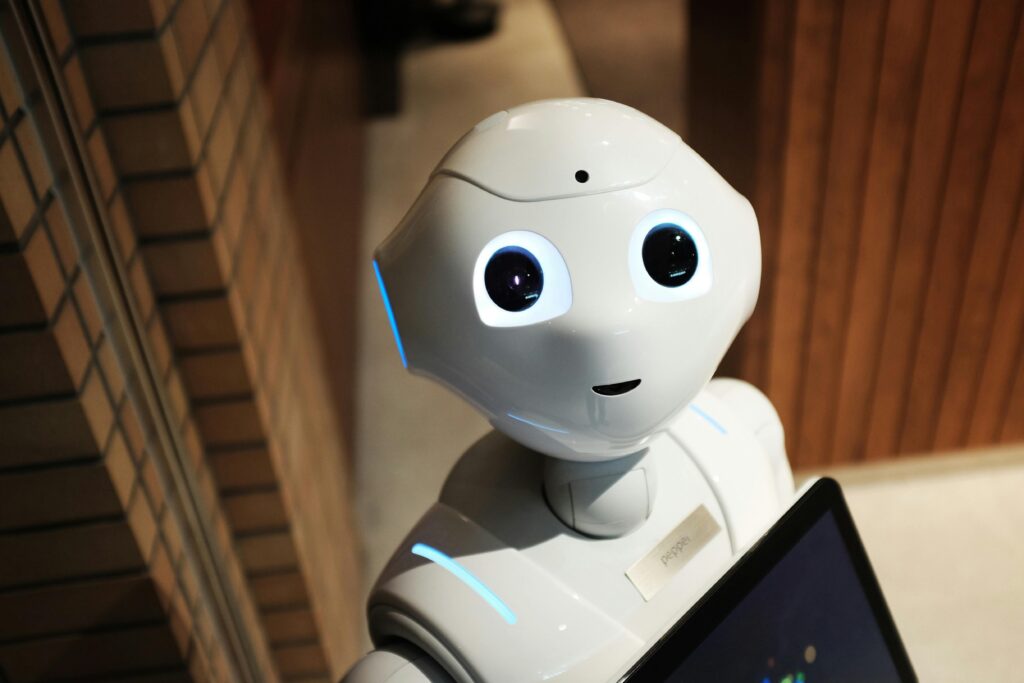
Humanoid robotics is rapidly moving from concept to reality. Advances in robotics, AI, and human interface technologies are enabling machines to move, learn, and interact in increasingly human-like ways. From manufacturing floors to healthcare facilities and public spaces, humanoid robots are beginning to reshape how humans and machines collaborate.
Understanding Humanoid Robots
Humanoid robots are designed to resemble the human body and behavior. Their structure typically includes a head, torso, arms, and legs, allowing them to operate in environments built for humans. This form factor makes them uniquely suited for tasks that require human-like movement and interaction.
Breakthroughs in Robotics Engineering
Modern robotics engineering has significantly improved motion control, balance, and flexibility. Advanced actuators and lightweight materials allow humanoid robots to walk smoothly, maintain stability, and perform precise physical tasks. These improvements are critical for real-world deployment beyond laboratories.
The Role of Artificial Intelligence in Robotics
AI acts as the cognitive engine of humanoid robots. Machine learning algorithms help robots interpret sensory data, make decisions, and improve performance over time. Instead of relying solely on fixed programming, AI enables adaptability in changing environments.
Why Human Interface Technology Is Crucial
Human interface systems bridge the gap between people and machines. Voice recognition, gesture control, and facial analysis allow robots to understand human intent more naturally. Improved interfaces reduce friction and make collaboration more intuitive.
Humanoid Robots in Manufacturing
In industrial settings, humanoid robots assist with assembly, quality checks, and material handling. Their human-like form allows them to work in existing factories without extensive infrastructure changes, increasing productivity while enhancing worker safety.
Applications in Healthcare
Healthcare providers are exploring humanoid robots for logistics support, patient guidance, and monitoring. AI-driven robots can operate around the clock, reducing staff workload and improving operational efficiency in hospitals and clinics.
Educational and Research Uses
Universities and research institutions use humanoid robots to teach robotics, AI, and engineering. Their interactive nature allows students to understand both physical mechanics and intelligent behavior in a single platform.
Customer Service and Public Interaction
Humanoid robots are increasingly used in airports, malls, and offices to assist visitors. With AI-powered conversational abilities, they can answer questions, provide directions, and deliver consistent customer experiences.
Humanoid Robots in Home Environments
Although still emerging, domestic humanoid robots are being developed to assist with daily activities. These robots aim to support aging populations by offering reminders, basic assistance, and companionship.
Advances in Perception and Sensors
Vision systems, depth sensors, and tactile feedback allow robots to perceive their surroundings accurately. AI enhances this perception by enabling object recognition, motion tracking, and environmental awareness.
Natural Language Communication
With progress in natural language processing, humanoid robots can understand spoken commands and respond conversationally. This makes interactions feel more human and reduces the learning curve for users.
Emotional and Social Intelligence
Some humanoid robots are being designed to recognize emotions through facial expressions and vocal tones. This capability helps robots respond appropriately in social or caregiving contexts, improving trust and engagement.
Ethical and Safety Challenges
As humanoid robots gain autonomy, ethical concerns emerge. Issues such as decision accountability, data privacy, and human dependency must be addressed through responsible design and regulation.
Human-Robot Collaboration
Rather than replacing humans, many robots are designed to work alongside them. Collaborative robotics combines human creativity and judgment with robotic precision and endurance.
Continuous Learning Through AI
Humanoid robots can improve through reinforcement learning and real-world experience. This ability allows them to adapt to new tasks and environments without extensive reprogramming.
Energy Efficiency and Mobility
Battery life and power management remain critical challenges. Advances in energy storage and motor efficiency are helping robots operate longer and move more naturally.
The Road Ahead for Humanoid Robotics
As AI and human interface technologies mature, humanoid robots will become more common in daily life. Their integration across industries is expected to accelerate over the next decade.
Conclusion
Humanoid robotics represents a powerful convergence of AI, robotics, and human interface innovation. These technologies are enabling machines to interact with people and environments in meaningful ways. As capabilities expand, humanoid robots will play an increasingly important role in industries, services, and everyday life, reshaping how humans and intelligent machines coexist.
Frequently Asked Questions
What is a humanoid robot?
A humanoid robot is a machine designed to resemble human form and behavior, enabling it to perform tasks in environments built for people.
How does AI improve humanoid robots?
AI allows robots to perceive, learn, adapt, and make decisions, making them more autonomous and effective in real-world scenarios.
Why is human interface technology important?
Human interface systems enable natural communication through voice, gestures, and expressions, improving collaboration between humans and robots.
Where are humanoid robots used today?
They are used in manufacturing, healthcare, education, customer service, and research, with growing interest in home assistance.
What challenges remain in humanoid robotics?
Key challenges include ethical concerns, safety, energy efficiency, and ensuring reliable interaction with humans.
If you want this content shortened, more marketing-focused, or adapted for a US tech audience, I can refine it further.
